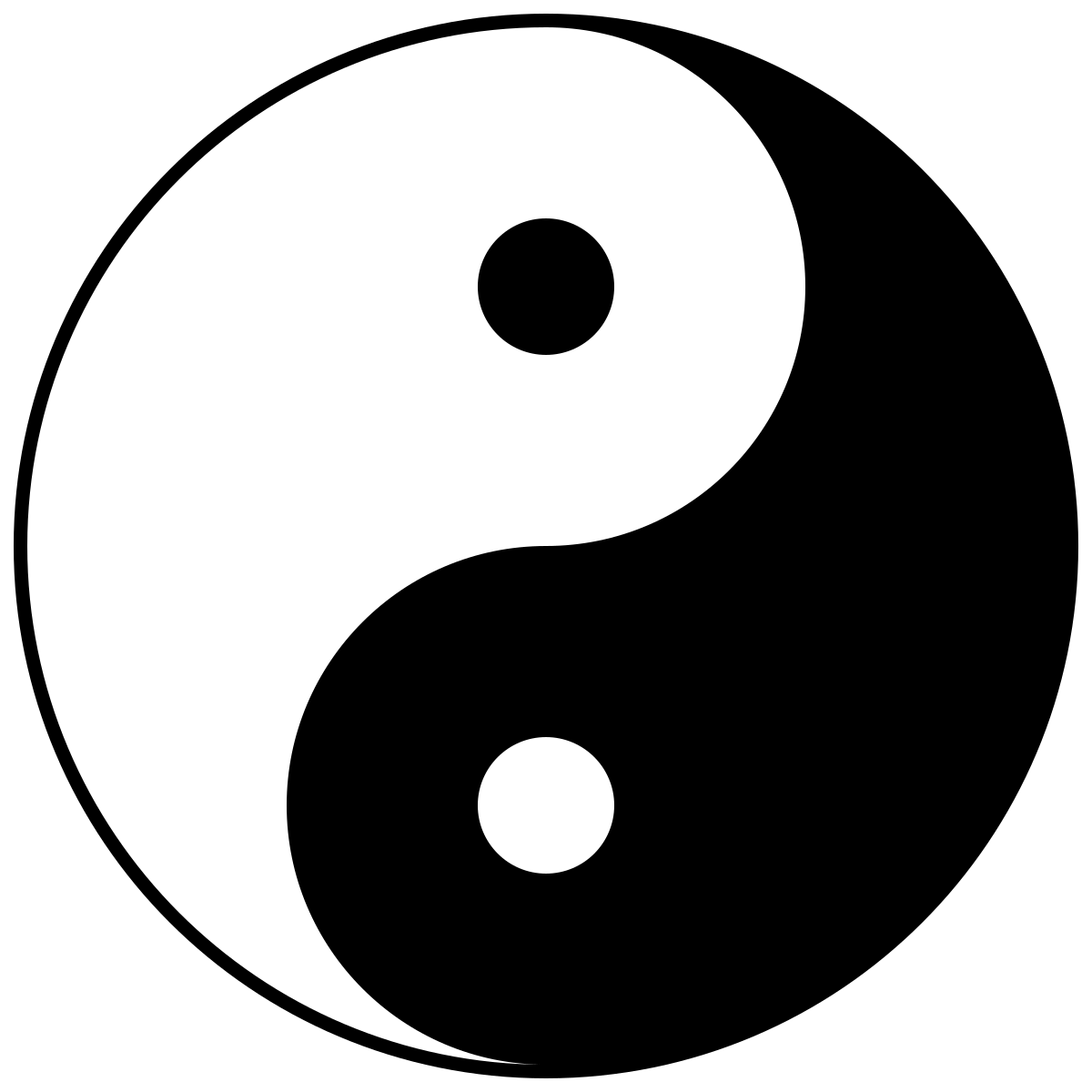
The Archetype of Duality, or the principle of opposites, is a fundamental concept in analytical psychology, closely associated with the Self archetype, which represents psychic wholeness.
The journey towards realizing the Self necessitates a confrontation with the inherent conflict presented by the paradox of opposites.
The fundamental paradox we face here is that in order to live a life of joy and ease, we have to learn to be comfortable with elements of life we find undesirable. That despite living in a world of unlimited connectivity, more and more of us feel alone. That our highest pursuits of justice are upheld by the very violence we seek to punish.
Theologians and philosophers have been wrestling with this split for millennia. Often they’ve framed it as the tension between soul and body - between the part of us reaching for transcendence and the animal self that just wants lunch, a nap, and maybe some company for the evening.
But here’s where it gets interesting: wholeness isn’t about choosing sides. It’s not about starving the body to feed the soul, or drowning our higher nature in pure sensation. The real work - what the alchemists called The Great Work and Jung termed individuation - happens in the dance between these opposites. It’s finding that dynamic balance where both aspects of our nature can coexist, even thrive together in wholeness.
Beyond its applications in understanding our inner world, we can also observe duality at play in a variety of external, natural phenomena. This is in accordance with the Hermetic Axiom, just look around and observe:
- The Sun and Moon in their eternal chase
- Hot and Cold both being two polarities on a spectrum of something we call temperature
- Expansion and Contraction
- Terrestrial and Celestial
- Wave and Particle (light itself can’t pick a lane!)
- Electromagnetism
In Eastern Philosophy these opposites have been identified as Yin and Yang. Through this symbol we can infer both the motion and interplay between these two.