I began this reflection at the point just before the winter solstice in the comfort of home, and completed it in the days following the new year after spending time in silence in the jungles of Central America. I’m deeply grateful for the opportunity to be with myself and with Mother Earth, using that container to alchemize the many experiences of this year.
The silence of the jungle and the busyness of home life aptly punctuate this year’s overarching theme: exploring lines of Duality in all facets of my life. It was a year of many firsts and many lasts - the year I took a hiatus from employment, stepped into entrepreneurship, incorporated a business, and explored devoting my time to my passions. This meant entering the public arena by creating content, delivering talks, and sitting on panels. It also meant learning to “be my own boss” and navigate the duality of hard work and regenerative rest.
The theme of duality extended beyond work. I experienced profound joy and profound grief - witnessing both a new birth and a sudden death in the family, along with everything each of these life events brings.
As we emerge from the festive season in the Northern Hemisphere, we’re reminded that our capacity to bring light into darkness forms the foundation of our resilience. Finding opportunities to smile and laugh despite hardship is a fundamental human experience - as is the uncertainty of the future and the fear of the unknown, of what lurks ahead in the darkness, of the Sublime.
Yet through joy we match fear with gratitude, hope, and optimism - a trust that with consistent effort over time, anything is possible. There’s a very real sense that the Universe is, in fact, conspiring to help us all.
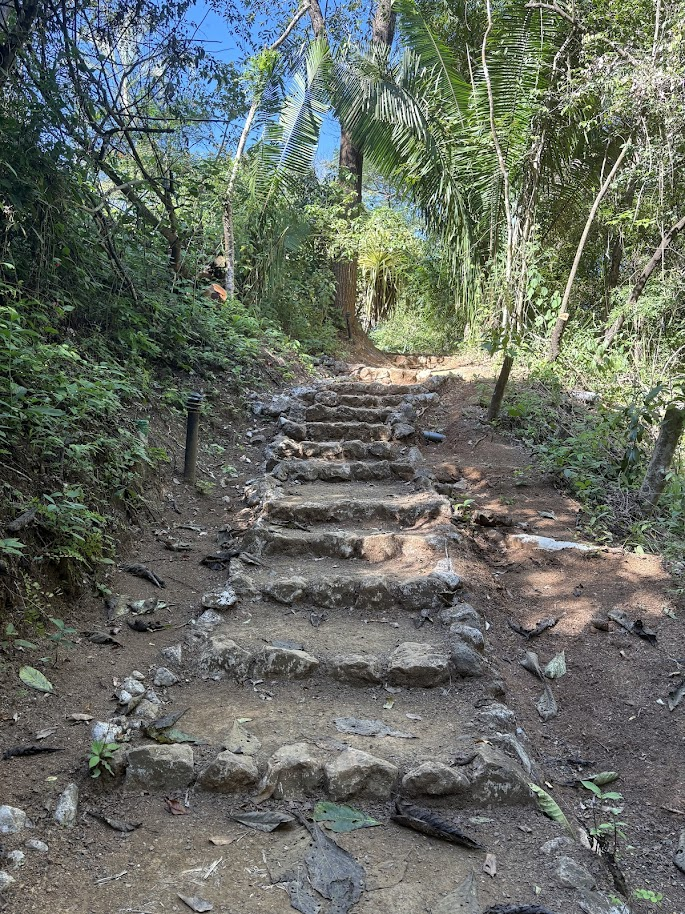
It’s with this spirit that I wrap up 2025, holding space for gratitude for the continued experience of life’s great mystery, as well as the shock and awe of stepping forward through what would undoubtedly be labeled “historic times.”
The Great Work of a Lifetime Continues
I sense that the journey I embarked on in 2019 is bearing fruit. The confrontation with change has presented me with new experiences, new challenges, and new relationships.
As I reflect on where I sit today, I find myself returning to the seeds planted at that time with a refreshed and embodied understanding. What originated as a sense that I could be living a different life back in 2019 now looks to be in motion. While the magnum opus in its full vision is still in its infancy, 2025 brought great clarity about what my heart and my capacities are asking of me.
2025 was about stepping into my confidence in who I am, what I represent, and what gifts I have to share.
What’s striking to me is how most of it has come about not according to my plans, but almost in spite of them.
Plans are an interesting thing. They originate in the part of us that values structure and predictability - they’re a shield against the anxiety that comes with facing the unknown. Yet when we examine well-lived lives, we see that chance meetings, snap decisions, and compounding coincidences are what lead to joy and fulfillment. We really have to pause to acknowledge the phenomenon of synchronicity.
For me, this year was a continuation of the experiment of surrendering to this force and all the beauty and discomfort it encompasses.
Apprenticeship with Grief
In August of this year, my family experienced a shocking loss. This moment served as an unlock to much of the emotional undercurrents lying underneath my motivations and behaviors.
If not obvious from everything prior to this point - I tend to default to problem solving and analytical thinking to reason my way through life and its challenges. This grief cut through everything. It brought me back into my body. It reminded me of what it meant to be human - that knowing this experience is both chaotic, impermanent, and uncomfortable creates the container in which joy and happiness are the beautiful flowers of our existence.
It forced me to stop and take account, and continues to be something I come back to as a grounding for the gratitude that is every breath taken.
But grief did more than ground me in gratitude. It stripped away the layers of protection I had built through analytical thinking and forced me to confront a fundamental question: if life is this fragile and impermanent, what am I doing hiding behind plans, automation, and the safety of problem-solving? What parts of myself have I been too afraid to show?
This question became the catalyst for everything that followed.
Stepping Into the Arena
I feel like most popular entrepreneurship stories come with some killer idea that just had to get made. In my case, the idea was “what if I became a business?”
At first, the motivation was my own curiosity. If I was going to apply my exploration of big ideas practically to my experience leading organizations through change, perhaps consulting might be a good mechanism. From there I figured: there’s no better case study on how I might help solopreneurs and entrepreneurs than figuring out how to do this myself.
Being an operator by trade, I started where I was most comfortable - process and structure. I incorporated, automated tools, set up organizational systems, and iterated on multiple plans.
Then I realized quickly that I was automating and building structure around something without a clear end customer or definition.
I received and accepted the advice that the best thing to do to get started would be to find customers. That in itself becomes the best mirror into why people value working with you. It’s also starting a business 101, which I thought I was safe to skip given my tenure scaling and operating high-performing businesses.
But no - it turns out starting is much different than scaling, which is much different than maintaining.
And while I’m experienced in sales, I gained perspective this year on how different it is to sell oneself as a service. I used to judge others in their methods of approaching this, but through the process of having a go at it myself, I can see that judgment as the projection of fears and uncertainty about how I’d approach this problem.
The grief in August crystallized something for me: I had been hiding behind the technical, the automated, the systematized. My pitches about AI process transformation were real and valuable, but they were also safe. They let me stay in my analytical comfort zone. They didn’t require me to be fully seen.
Grief taught me that hiding from vulnerability doesn’t protect you from pain - it just ensures you experience life at a distance. And if I was going to step into entrepreneurship, if I was going to truly serve others in moments of change, I needed to show up fully. Not just as the operator with the systems, but as the whole person who had walked through his own transformations.
Becoming a Coach
It was through this shift that I found myself face to face with the professional who had kicked off my 2019 apprenticeship with change.
I was on a roll of networking events and cohort-based trainings, but something had changed in how I was showing up. I began speaking about change as a dynamic process of involution and evolution - one which we can examine in nature through the rhythm and polarity of the seasons, and one well articulated in modes of understanding such as systems thinking and Process Philosophy.
This pitch was the most heartfelt of anything I had delivered this year. Previous pitches had centered primarily around AI process transformation rooted in my own success in automating various elements of my practice. But this came from somewhere deeper - from the part of me that grief had cracked open.
Feedback was positive and I enjoyed these conversations deeply. It was an opportunity to marry my interests in responding to the meaning crisis and understanding human development through the course of history, culture, religion, mythology, and storytelling.
Stepping into the arena meant allowing others to see me in my entirety, and what was reflected back at me was that there was real interest in leveraging my insights and experiences to support others in making meaning out of their life journeys and approaching key moments of change with ease.
In August - the same month as the loss - I began my certification process with the International Coaching Federation, and I’ve made this a foundational pillar of my offering in the arena. Through certification, I am bound to the standards, ethics, and quality such a profession deserves - and it has allowed me to serve my early clients and start to bring about meaningful change for them - something I have found infinitely gratifying.
In the fall, I worked with a client who was navigating their own grieving process. As they shared their experience, I recognized immediately that I would not have been able to hold space for them in the way they needed just months earlier. My own loss in August had given me something no certification could teach - the embodied knowledge of how grief strips away pretense, how it demands presence rather than solutions, how it requires someone to simply witness without trying to fix.
I sat with this person as they moved through their pain, and watched as that space allowed them to find their own strength - strength they then carried back to show up for their family in ways they hadn’t thought possible. It was in that moment I understood the power of interdependence - that my grief had prepared me to hold space for theirs, and in doing so, they could hold space for their loved ones. We don’t walk through transformation alone, and we don’t hold the container for others’ transformation alone either.
This experience pointed me to the profound importance of the work I have decided to take on as a coach. Not as someone with all the answers, but as someone willing to have walked through the fire themselves.
It also gave me the courage to step into another arena entirely. Through a partnership that emerged from my coaching training, I launched a podcast called Myth Mongers with my peer and now good friend Laurel (aka griefandgrowthguide)- a project dedicated to using the power of myth and storytelling to understand the journey of the self.
This was terrifying in a way that surprised me. There was something different about committing to an ongoing public conversation about ideas that are deeply personal to me. Myth, story, the hero’s journey, the meaning we make from ancient wisdom - these aren’t just professional interests. They’re the threads I’ve been weaving together to make sense of my own life since 2019.
Recording each episode meant showing up consistently, not just when I felt ready or polished. It meant being willing to think out loud, to be wrong, to let people see the process of sense-making rather than just the finished product. It meant trusting that the ideas dear to my heart might also be meaningful to others.
And they were. The response showed me that others were hungry for this kind of exploration - for conversations that bridge the ancient and the modern, the mythic and the practical, the personal and the collective. Myth Mongers became another expression of what grief had taught me: that showing up fully, even when afraid, creates space for others to do the same.
The timing wasn’t coincidental. Grief had shown me what truly mattered, and coaching - along with the podcast - became vehicles through which I could honor that understanding by helping others navigate their own moments of transformation.
Building My Second Brain
At some point in 2024, I overheard folks at 1RG talking about a tool called Obsidian.
I didn’t pay it much attention immediately, but as AI mania increased in the circles around me, I became absorbed in the idea of how I might augment my memory and capacity to create, study, synthesize, and expand using AI-assisted tools.
This began with a deep dive into the various LLMs available at the time and the tools they came with. The space has moved quickly - back then we didn’t have the convenience of chat memory allowing an LLM to “get to know us.”
But I was curious. I delved far deeper into talks and articles about AI architecture than someone of my limited technical ability probably should have. Backed by the confidence that anything I didn’t understand I could discuss with my LLM companion, I took leaps and bounds into areas I’d never explored before. I took courses on Python and learned how to use it to make automated calls to various LLMs.
I became obsessed with how I might leverage these tools to help me categorize, annotate, and link my ideas - but not just for organization’s sake. What I was really after was a way to integrate my own learning and share it in a form that could be useful to others.
From 2019 onwards, I’ve been voraciously consuming books across disciplines - philosophy, neuroscience, psychology, the history of ideas. I’ve been building a perspective on the world that is both rooted in ancient and indigenous wisdom and practical for living a good life in our current environment. But these insights were scattered, disconnected, living in notebooks and highlights and half-formed thoughts.
The promise of a second brain wasn’t just about storage - it was about discovering the connections. How does a concept from Process Philosophy relate to what neuroscience tells us about how we form habits? How do ancient practices of meaning-making speak to what we’re experiencing now as traditional structures break down?
This latter question has become particularly important to me. We’re living in what some call the meaning crisis - a time when the old stories, institutions, and frameworks that helped people make sense of their lives no longer hold the same authority. Religion, community structures, clear career paths, stable identities - many of the containers that once provided meaning have either dissolved or are dissolving. We’re left asking: what now? How do we find purpose and direction when the old maps no longer match the territory?
At the same time, we’re in a process of hospicing modernity - tending to the forms and systems that are dying while midwifing what wants to be born. This isn’t about abandoning everything from the past or blindly embracing the new. It’s about discernment - recognizing what still serves us, what needs to be released, and what new possibilities are emerging in the spaces between.
These aren’t just abstract philosophical questions. They show up in my coaching conversations when someone asks “what am I supposed to do at this point in my life?” They show up when organizations struggle to adapt to rapid change. They show up when we feel simultaneously overwhelmed by information and starved for wisdom.
The promise of a second brain - a virtual assistant to support me in cataloguing, categorizing, and synthesizing insights - became a key passion because it offered a way to make these connections visible. This led me right back to Obsidian: not an AI tool itself, but a foundation for building an interconnected, networked map of ideas.
At first, I jumped headfirst into MCP in its early phases, exploring how an AI assistant could help me catalogue ideas floating around in disconnected formats and paper notes. However, I found the results to be less of me and more of the machine. This encouraged me to explore how I could better help myself.
This process was, and is, a constant iterative design process, with myself as both end customer and lead engineer. But what’s emerged has been more than just a personal knowledge management system. Through this organization of my thoughts, new pathways have been illuminated - particularly the pathways of experience that tie together this diverse blend of philosophy, neuroscience, psychology, and the history of ideas into something genuinely helpful.
It’s one thing to read about systems thinking in isolation. It’s another to see how it connects to neoplatonic, indigenous or Kabbalistic frameworks of understanding, how each of these relate to what we understand about neuroplasticity, and how all of this can inform how someone approaches a career transition or a moment of grief. The second brain doesn’t just store these ideas - it helps me see the living relationships between them.
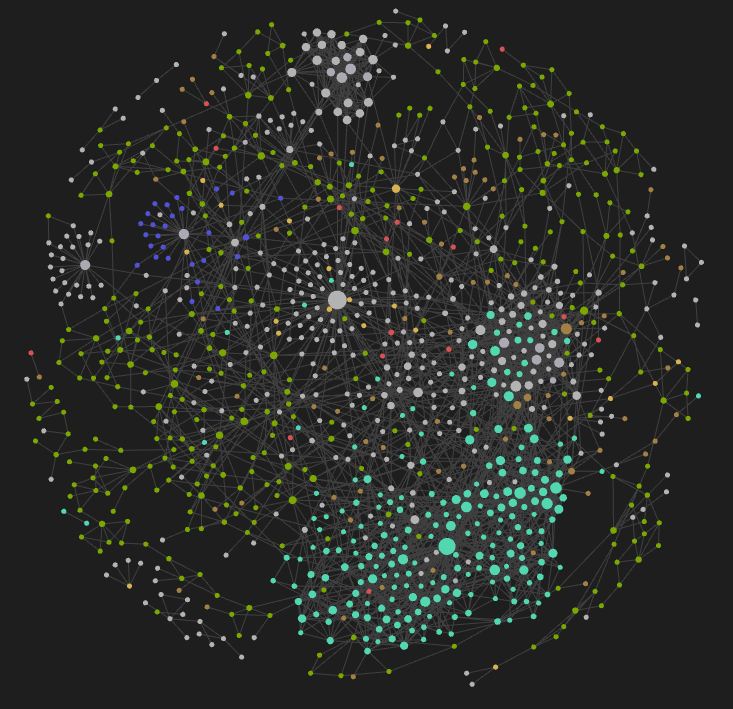
What also emerged from this was the desire to share. While much of this remains my own private sense-making - journaling and interacting with the world through daily inquiry - more and more of it has surfaced on ali-abbas.me. I hope to expand this in 2026.
The work of translating what I’ve learned over the last few years into something that balances both depth and accessibility has become central to the gifts I hope to continue sharing. Because if we’re going to navigate this meaning crisis, if we’re going to hospice modernity while birthing what comes next, we need ways to integrate wisdom from multiple sources and make it practically useful for the lives we’re actually living.
Balance
The loss in August deepened my commitment to exploring the dualities that had emerged as this year’s central theme. Life and death. Work and play. Fear and love. I put time into cultivating Awareness around the many ways my life dances across these polarities.
Capstoning the year was my pilgrimage to the jungles of Costa Rica for a retreat in Silence. I felt the immense gratitude for the privilege of being able to do this - for the lived experience of spending time with myself and with the intentions made for the new year. The silence I had begun this reflection in became the bookend to a year defined by learning to hold space for opposing forces, for light and dark, for the full spectrum of what it means to be alive.
Looking Forward to 2026
I began this reflective process ten days ago at home, and end it from the airport in Costa Rica, awaiting my flight home.
There’s a lot to look forward to, as well as a continued backdrop of chaos as I look at the state of the collective.
The loss I experienced in August taught me something I had been trying to learn intellectually for years: that we can’t think our way through transformation. Grief stripped away my analytical defenses and brought me back into my body, back into the present moment, back into the understanding that meaning isn’t something we construct through plans - it’s something we discover by showing up fully to what life presents.
This opened a door I hadn’t realized I’d been keeping closed. It gave me the courage to step into the arena not as the operator with the systems and the answers, but as a whole person who has walked through fire and is willing to sit with others as they walk through theirs. The work I’ve taken on as a coach, the connections I’m making visible through my second brain, the content I’m sharing - all of it flows from this willingness to be seen in my entirety.
I’ve learned this year that it’s not just the journey of a single hero, but of many of us moving together as individuals and a collective. My grief prepared me to hold space for my client’s grief, which allowed them to hold space for their family. This is interdependence - not as a concept, but as a lived reality. We don’t transform alone, and we don’t hold the container for transformation alone either.
As I return home from the jungle and step into 2026, I carry the silence with me. Not as an escape from the noise, but as a reminder that both are necessary - that the duality of action and rest, speaking and listening, building and releasing, is what allows the Great Work to unfold.
The Universe continues to conspire, not through my plans, but through my willingness to surrender to what wants to emerge.
With that, I want to close with gratitude. To my wife, to my family, to new friends and old friends, to supporters, and to my adversaries - to all of you who have served as companions and teachers on this journey.
Thank you. Ali Abbas